 EN
EN

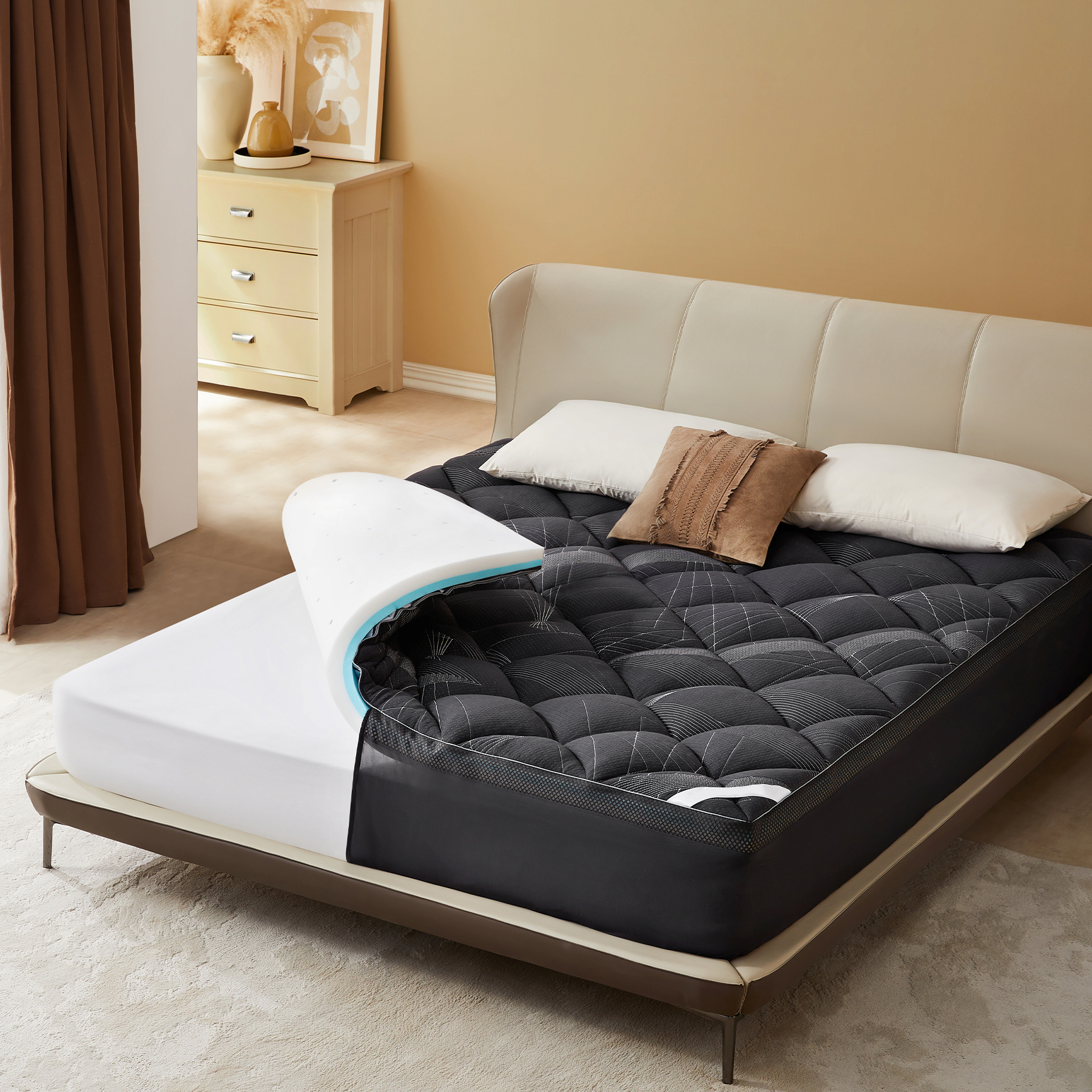
How Hypoallergenic Mattress Protectors Block Allergens: Science Behind the Barrier
Why Pore Size ≤10 Microns Is Critical for Trapping Dust Mites, Pet Dander, and Pollen
How well a hypoallergenic mattress protector works really depends on how good it is at filtering out stuff. Dust mites are about 10 to 24 microns big, pet dander ranges from 2.5 to 10 microns, and pollen can be anywhere from 10 up to 100 microns. For these tiny particles to stay away from our beds, the protector needs pores no bigger than 10 microns. Think of it as a super fine mesh screen that stops allergens from getting through but still lets air circulate properly. Tests have shown that when protectors meet this standard, they block around 99.7% of all those little particles before they ever reach the mattress itself. If the holes are too big though, allergens just slip right in and start building up in the bedding layers. That's what causes problems later on when we're trying to sleep. So looking for something with that magic number below 10 microns gives solid protection while keeping things breathable enough not to feel stuffy.
Fabric Technology Face-Off: Tight-Weave Cotton & Tencel™ vs. PU Membrane Barriers
Two dominant technologies achieve the critical ≤10-micron barrier through different approaches:
| Feature | Tight-Weave Natural Fibers | PU Membrane Barriers |
|---|---|---|
| Material | Organic cotton, Tencel™ lyocell | Polyurethane laminate |
| Breathability | High (moisture-wicking) | Low (risk of heat buildup) |
| Allergen Blocking | Mechanical filtration via dense weave | Continuous synthetic barrier |
| Eco-Profile | Biodegradable, plant-based | Petroleum-derived |
Natural fabrics with tight weaves work by blocking allergens thanks to their dense construction, yet still let moisture escape through the fabric. The smooth surface of Tencel fibers makes it harder for particles to stick around and also helps prevent microbes from growing too much. On the flip side, those PU membrane materials definitely keep water out, but they tend to trap heat inside creating damp conditions that are basically perfect breeding grounds for mold and dust mites. Both options can filter down to about 10 microns if kept in good condition, though many people find that natural fibers just feel better against their skin, especially during warmer nights or for folks who suffer from allergies.
Certified Safety and Full Coverage: Non-Negotiable Features of a True Hypoallergenic Mattress Protector
OEKO-TEX® Standard 100, GOTS, and Asthma & Allergy Friendly® Certifications – What They Guarantee
Independent certifications actually back up those safety and performance claims instead of just being marketing fluff. Take OEKO-TEX Standard 100 for instance. This certification checks that there are no more than 300 dangerous chemicals present throughout all parts of the product. We're talking about stuff like formaldehyde, heavy metals, and those irritating dyes that can cause reactions. Then there's GOTS, which stands for Global Organic Textile Standard. What does that mean? Well, basically it confirms that the fibers come from organic sources, the processing methods don't involve toxic chemicals, and the manufacturing follows ethical guidelines. For people concerned about allergies, the Asthma & Allergy Friendly certification matters a lot. Administered by Allergy Standards Ltd., this one needs actual lab tests showing at least 95% fewer live dust mites and their allergens when tested in normal living conditions. When products carry these different certifications together, customers know they're getting something genuinely safe for sensitive skin and actually works as promised, not just labeled as hypoallergenic without real backing behind it.
360° Full-Encasement Design: Why Zippers, Sealed Corners, and Elastic Skirt Matter for Allergy Control
Complete mattress sealing is essential to prevent allergen escape and reinfestation. Unlike flat-top covers, true 360° encasement uses three integrated features:
- Micro-sealed zippers with overlapping fabric flaps to eliminate microscopic entry points along closure seams
- Ultrasonically welded corners, which fuse fabric layers without stitching gaps where allergens can migrate
- Deep-pocket elastic skirts (18+ inches) engineered to grip mattress edges firmly and maintain full contact—even with movement or shifting
The mattress design works by trapping dust mites, pet dander, and mold spores right inside the core so they don't float around in the air while someone sleeps. Research into indoor air quality indicates that when coverage isn't complete, allergens can actually penetrate materials at rates as high as 34%. People who suffer from asthma or allergies need something better than partial solutions. Zippered covers that create a full seal are really the only option backed by actual research for proper protection against these common household irritants.
Maintaining Allergen Protection: Washing, Drying, and Long-Term Care Guidelines
Optimal Wash Frequency, Temperature, and Detergent Use to Preserve Barrier Integrity and Prevent Recontamination
Consistent, science-informed care preserves filtration performance and prevents your protector from becoming an unintended reservoir for allergens. Follow these evidence-based guidelines:
- Frequency: Wash weekly—this removes accumulated dust mites, dander, and skin flakes before they embed in the fabric matrix. Weekly laundering reduces surface allergen loads by 95% compared to monthly cleaning.
- Temperature: Use hot water at 55°C (130°F) or higher to denature dust mite proteins and deactivate allergens. Modern barrier fabrics—including certified Tencel™ and PU laminates—are engineered to withstand this temperature without structural compromise.
- Detergents: Select fragrance-free, dye-free, and enzyme-free formulas. Harsh surfactants and optical brighteners degrade waterproof membranes and leave residues that attract and bind allergens.
- Drying: Air-dry whenever possible; if using a dryer, select low heat only. High heat weakens elastic components and degrades ultrasonically welded seams over time, compromising the full-encasement seal.
| Practice | Benefit | Risk of Non-Compliance |
|---|---|---|
| Weekly washing | Prevents biofilm formation and allergen accumulation | Increased pore clogging and allergen penetration |
| Hot water (55°C+) | Kills live dust mites and neutralizes allergenic proteins | Surviving mites reproduce and amplify allergen load |
| Mild detergents | Preserves membrane integrity and prevents residue buildup | Chemical degradation of barrier layers and increased allergen adherence |
Adhering to these protocols extends functional lifespan by 2–3 years and sustains clinical-grade protection. Always defer to manufacturer instructions—particularly for PU-laminated models—as material tolerances vary.